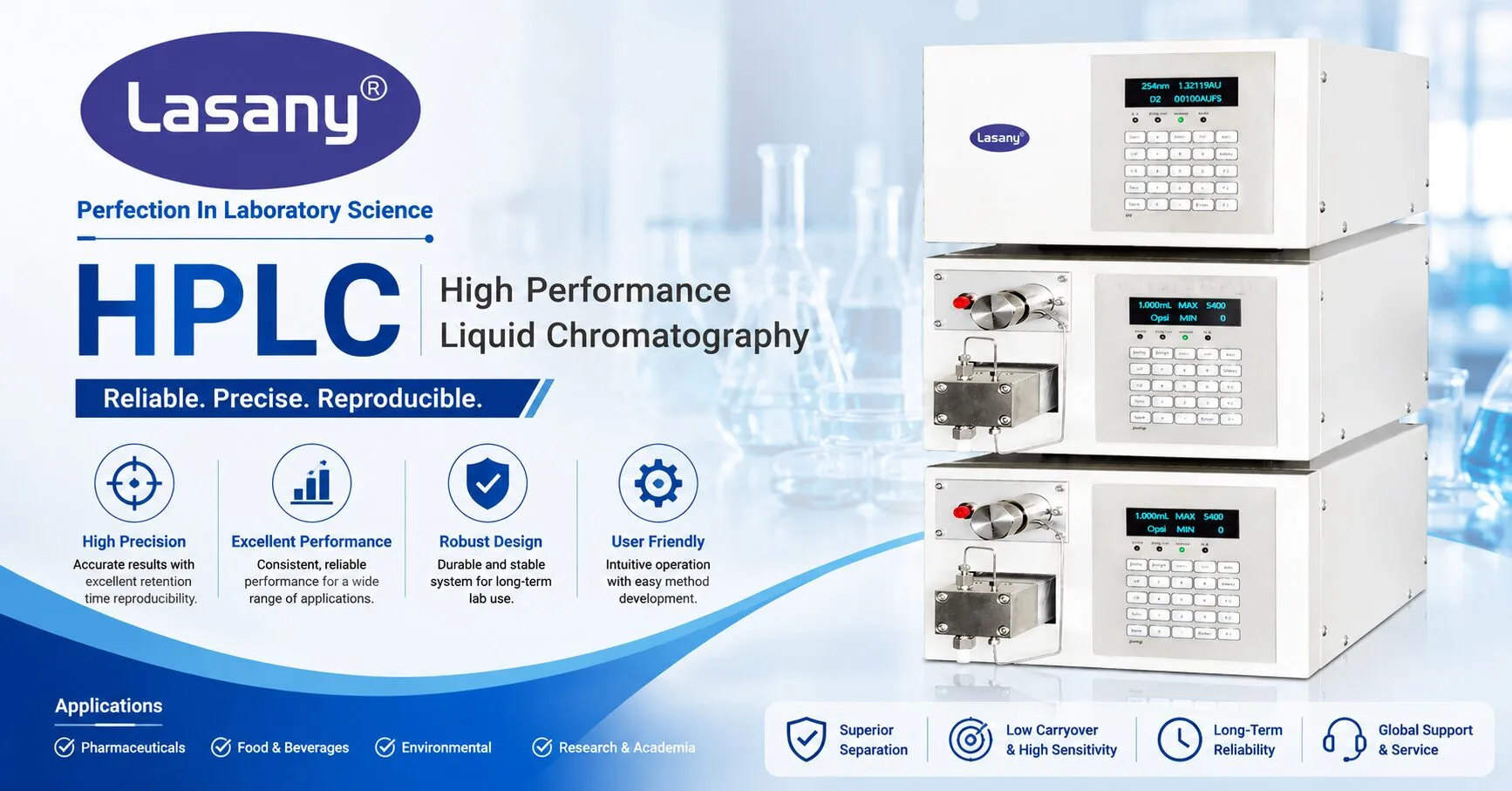
Modern laboratories require advanced analytical instruments for accurate chemical separation, identification, and quantitative analysis. One of the most widely used analytical techniques in pharmaceutical, chemical, food, environmental, and research laboratories is HPLC Liquid Chromatography. Known for its precision, sensitivity, and reliability, HPLC technology has become an essential part of quality control and scientific research worldwide.
India has rapidly emerged as a major hub for laboratory and analytical instrument manufacturing, supplying high-quality systems to both domestic and international markets. Companies like Lasany International are contributing significantly to the scientific equipment industry by offering reliable laboratory instruments and advanced analytical solutions for research and industrial applications.
This comprehensive guide explains everything about liquid chromatography, including its working principle, components, applications, advantages, industrial uses, maintenance, and how to select the right HPLC system for laboratory requirements.
What is HPLC Liquid Chromatography?
HPLC stands for High-Performance Liquid Chromatography, an advanced analytical technique used for separating, identifying, and quantifying compounds present in liquid samples.
In HPLC Liquid Chromatography, a liquid sample passes through a column packed with stationary phase material under high pressure. Different compounds in the sample interact differently with the stationary phase, causing them to separate based on their chemical properties.
HPLC systems are commonly used for:
- Pharmaceutical analysis
- Chemical testing
- Food quality testing
- Environmental analysis
- Biotechnology research
- Clinical laboratories
- Academic research
Due to its high accuracy and sensitivity, high-performance liquid chromatography is considered one of the most reliable analytical techniques in modern laboratories.
Importance of HPLC Liquid Chromatography
The demand for accurate analytical testing has increased significantly across industries. HPLC technology helps laboratories achieve highly precise separation and quantification of compounds.
Key Importance of HPLC Systems
- Accurate compound separation
- High sensitivity analysis
- Reliable quantitative testing
- Fast analytical performance
- Excellent reproducibility
- Support for research and development
- Quality assurance and compliance
Industries rely on HPLC systems to ensure product safety, consistency, and regulatory compliance.
Working Principle of HPLC Liquid Chromatography
The working principle of the HPLC system is based on the interaction between the sample compounds, the stationary phase, and the mobile phase.
Basic Working Process
- The liquid sample is injected into the system.
- A solvent known as the mobile phase carries the sample through the column.
- The stationary phase inside the column interacts with different sample compounds.
- Compounds separate depending on their affinity toward the stationary and mobile phases.
- The detector identifies separated compounds.
- The software records chromatographic data for analysis.
The retention time of compounds helps identify substances present in the sample.
The flow rate relationship in chromatography can be represented as:
F = \frac{V}{t}
Where:
- F = Flow rate
- V = Volume of solvent
- t = Time
This principle helps maintain precise solvent movement through the HPLC system.
Main Components of HPLC Liquid Chromatography System
This system consists of several important components designed for accurate analytical performance.
1. Solvent Reservoir
Stores the mobile phase solvents required for sample separation.
2. Pump System
The pump delivers solvent through the system at high pressure and a constant flow rate.
Key Features:
- High-pressure operation
- Stable flow delivery
- Accurate solvent mixing
3. Injector
Introduces the sample into the HPLC system.
4. HPLC Column
The column contains a stationary phase material where actual separation occurs.
Common Column Types:
- C18 columns
- Reverse phase columns
- Normal phase columns
5. Detector
Detects separated compounds after they exit the column.
Common Detectors:
- UV detector
- PDA detector
- Fluorescence detector
- Refractive index detector
6. Data Processing Software
Modern HPLC systems use software for:
- Chromatogram analysis
- Data storage
- Peak integration
- Reporting
Types of HPLC Liquid Chromatography
Different applications require different HPLC techniques.
1. Reverse Phase HPLC
The most commonly used HPLC technique.
Features:
- Non-polar stationary phase
- Polar mobile phase
- Excellent versatility
Applications:
- Pharmaceutical analysis
- Food testing
- Environmental monitoring
2. Normal Phase HPLC
It uses a polar stationary phase and a nonpolar mobile phase.
Applications:
- Lipid analysis
- Isomer separation
3. Ion Exchange HPLC
Separates ionic compounds based on charge interactions.
Applications:
- Protein purification
- Water analysis
4. Size Exclusion HPLC
Separates compounds based on molecular size.
Applications:
- Polymer analysis
- Protein studies
Applications of HPLC Liquid Chromatography
HPLC liquid chromatography is widely used across multiple industries and research sectors.
1. Pharmaceutical Industry
The pharmaceutical sector heavily relies on HPLC systems for:
- Drug formulation analysis
- Purity testing
- Stability studies
- Dissolution testing
- Impurity profiling
Pharmaceutical laboratories use these HPLC analysis systems to comply with strict quality standards and regulatory requirements.
2. Food and Beverage Industry
Food laboratories use HPLC systems for:
- Additive analysis
- Vitamin testing
- Preservative detection
- Food contamination analysis
- Sugar profiling
This helps ensure food safety and product consistency.
3. Environmental Testing
Environmental laboratories use HPLC technology for:
- Water pollution analysis
- Pesticide detection
- Soil contamination studies
- Industrial waste analysis
HPLC systems support environmental safety and regulatory compliance.
4. Chemical Industry
Chemical manufacturers use HPLC liquid chromatography for the following:
- Raw material analysis
- Chemical purity testing
- Reaction monitoring
- Quality control
5. Biotechnology and Research
Research laboratories use HPLC systems for:
- Protein analysis
- Biomolecule separation
- DNA research
- Biochemical studies
Advantages of HPLC Liquid Chromatography
Modern HPLC systems provide several advantages over traditional analytical methods.
High Accuracy
HPLC offers highly precise quantitative analysis.
Excellent Sensitivity
Capable of detecting compounds in trace quantities.
Fast Analysis
Provides rapid analytical results for high laboratory productivity.
Better Separation Efficiency
Efficiently separates complex mixtures.
Reliable Repeatability
Ensures consistent testing performance.
Automation Capability
Modern systems support automatic operation and sample handling.
Wide Application Range
Suitable for pharmaceuticals, chemicals, food, biotechnology, and environmental testing.
Why Laboratories Prefer HPLC Systems
Laboratories worldwide prefer HPLC liquid chromatography because it offers the following:
- Reliable analytical performance
- Precise quantification
- Fast processing
- Low detection limits
- Excellent reproducibility
- Advanced software integration
These benefits make HPLC one of the most trusted analytical techniques globally.
Importance of HPLC in Pharmaceutical Industry
Pharmaceutical industries require accurate testing systems to maintain product safety and effectiveness.
Pharmaceutical applications include the following:
- Active ingredient analysis
- Drug stability testing
- Dissolution studies
- Impurity analysis
- Quality assurance testing
HPLC systems help pharmaceutical companies comply with GMP and international regulatory guidelines.
HPLC Liquid Chromatography in Food Testing
Food safety laboratories use HPLC systems for detecting harmful substances and ensuring nutritional quality.
Food Testing Applications:
- Artificial color analysis
- Sweetener testing
- Toxin analysis
- Nutritional analysis
- Flavor compound identification
This improves food safety and consumer confidence.
HPLC in Environmental Laboratories
Environmental regulations require accurate pollutant monitoring.
HPLC systems help analyze:
- Industrial pollutants
- Organic contaminants
- Water toxins
- Agricultural chemicals
These systems support environmental sustainability and public health protection.
Key Features of Modern HPLC Systems
Advanced HPLC liquid chromatography systems include modern features designed for laboratory efficiency.
High-Pressure Pump System
Ensures stable solvent delivery.
Digital Display Interface
Provides easy monitoring and control.
Automatic Sample Injector
Improves laboratory productivity.
Advanced Detector Technology
Enhances analytical sensitivity.
Software Integration
Allows:
- Data management
- Peak analysis
- Report generation
Compact Design
Modern systems save laboratory space.
Factors to Consider Before Buying HPLC Liquid Chromatography System
Selecting the right HPLC system depends on laboratory requirements.
Analytical Requirements
Determine the type of compounds being analyzed.
Detector Compatibility
Select suitable detectors for analytical applications.
Sample Throughput
High-volume laboratories require automated systems.
Software Features
Advanced software improves laboratory efficiency.
Maintenance Support
Choose manufacturers offering technical assistance.
Budget Planning
Consider long-term operational costs.
Maintenance Tips for HPLC Systems
Proper maintenance improves instrument lifespan and analytical accuracy.
Regular Solvent Cleaning
Flush the system after analysis.
Column Maintenance
Use suitable solvents and filters.
Leak Inspection
Check pump seals and tubing regularly.
Detector Cleaning
Maintains accurate signal detection.
Routine Calibration
Improves analytical precision.
Proper Storage Conditions
Protect instruments from dust and humidity.
Common Problems in HPLC Liquid Chromatography
1. Pressure Fluctuation
Possible causes:
- Blocked column
- Air bubbles
- Pump malfunction
2. Poor Peak Shape
Possible causes:
- Contaminated column
- Incorrect mobile phase
- Sample overload
3. Baseline Noise
Possible causes:
- Detector contamination
- Solvent impurities
- Electrical interference
Routine servicing helps avoid operational issues.
Future of HPLC Liquid Chromatography
HPLC technology continues evolving with advanced innovations.
Emerging Trends
- Ultra-High Performance Liquid Chromatography (UHPLC)
- AI-assisted chromatography analysis
- Automated sample handling
- Cloud-based data systems
- Advanced software integration
- Smart laboratory connectivity
Modern laboratories increasingly adopt automated analytical systems for improved productivity and precision.
Why Indian Laboratory Equipment Manufacturers are Growing Globally
India has become a major supplier of scientific instruments because of:
- Affordable manufacturing
- Skilled engineering expertise
- Quality production standards
- Technical support services
- Global export capabilities
Companies like Lasany International continue supporting laboratory growth by providing dependable scientific instruments and laboratory solutions for research and industrial applications.
Importance of Analytical Instruments in Modern Laboratories
Modern laboratories require highly accurate instruments for quality control and scientific research.
HPLC liquid chromatography systems help laboratories
- Analyze complex compounds
- Improve research quality
- Maintain industrial standards
- Ensure regulatory compliance
- Increase laboratory efficiency
This makes HPLC one of the most essential analytical technologies worldwide.
FAQs – HPLC Liquid Chromatography
What is HPLC liquid chromatography used for?
HPLC is used for separating, identifying, and quantifying chemical compounds in liquid samples.
Which industries use HPLC systems?
Industries include pharmaceuticals, food processing, environmental testing, biotechnology, chemicals, and research laboratories.
What are the advantages of HPLC?
Advantages include:
- High accuracy
- Excellent sensitivity
- Fast analysis
- Better separation efficiency
- Reliable repeatability
What is the difference between HPLC and traditional chromatography?
HPLC uses high-pressure systems for faster and more accurate separation compared to conventional chromatography methods.
Why is HPLC important in pharmaceutical laboratories?
It helps analyze drug purity, stability, active ingredients, and impurities for quality assurance.
Conclusion
HPLC Liquid Chromatography has become one of the most important analytical technologies in modern laboratories. Its ability to provide accurate compound separation, high sensitivity analysis, and reliable quantitative testing makes it essential for pharmaceutical, chemical, food, environmental, and research applications.
As laboratory testing requirements continue growing worldwide, industries increasingly depend on advanced HPLC systems for quality control, research, and regulatory compliance.
Companies like Lasany International are supporting the scientific community by offering dependable laboratory instruments and analytical solutions designed for precision, durability, and long-term performance.
Choosing the right HPLC analysis system ensures improved laboratory efficiency, accurate analytical results, and reliable scientific research for modern industrial and research applications.
Get in Touch with Us: –
Panchkula, Haryana
Website: https://lasany.org/
Address: SCF-132, Sector 17, Panchkula, Haryana 134109
Email:- lasanyinternationalindia@gmail.com
Online Support:- 9888911439 / 9803017479
If you are looking for laboratory, analytical, and medical products, then Lasany International is the perfect choice for you.