
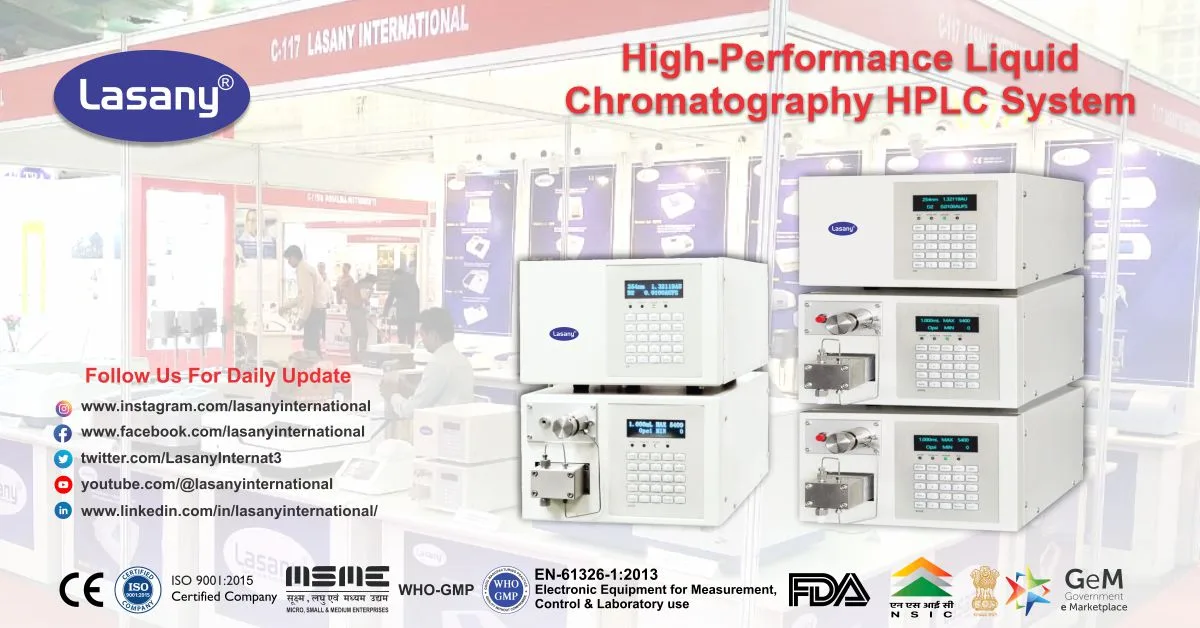
High-performance liquid chromatography (HPLC) is one of the most powerful analytical techniques used across laboratories worldwide. From pharmaceuticals and food safety to environmental testing and clinical research, HPLC plays a critical role in identifying, separating, and quantifying chemical compounds with exceptional precision.
In this comprehensive SEO-optimized guide, you’ll learn everything about High Performance Liquid Chromatography—its working principle, types, applications, advantages, limitations, and how to choose the right system for your lab.
Introduction to High Performance Liquid Chromatography
What is High Performance Liquid Chromatography (HPLC)?
High Performance Liquid Chromatography (HPLC) is an advanced analytical technique used to separate, identify, and quantify components in a liquid mixture. It operates under high pressure to push solvents and samples through a column packed with a stationary phase, enabling precise separation of compounds based on their chemical properties.
HPLC is widely preferred due to its accuracy, sensitivity, and ability to handle complex mixtures.
Brief History and Evolution of HPLC
HPLC evolved from traditional liquid chromatography in the 1960s when scientists introduced high-pressure pumps to improve separation efficiency. Over time, technological advancements such as automated systems, improved detectors, and ultra-high performance liquid chromatography (UHPLC) have significantly enhanced performance and speed.
Why HPLC is Important in Modern Laboratories
- Enables accurate chemical analysis
- Essential for quality control and research
- Supports regulatory compliance in industries
- Provides reliable and reproducible results
How High Performance Liquid Chromatography Works
Basic Principle of HPLC
The principle of HPLC is based on the distribution of compounds between two phases:
- Mobile Phase (liquid solvent)
- Stationary Phase (solid column packing)
Different compounds travel at different speeds depending on their interaction with these phases, leading to separation.
Key Components of an HPLC System
1. Solvent Reservoir
Stores the mobile phase used to carry the sample through the system.
2. Pump
Generates high pressure to move the solvent through the column at a constant flow rate.
3. Injector
Introduces the sample mixture into the mobile phase stream.
4. Column
The heart of the HPLC system where separation occurs. It contains stationary phase material.
5. Detector
Identifies and quantifies separated compounds. Common detectors include UV, PDA, and fluorescence detectors.
6. Data System
Records and analyzes the output signals to produce chromatograms.
Step-by-Step Working Process of HPLC
- The mobile phase is pumped through the system
- The sample is injected into the flow
- Compounds interact with the stationary phase
- Separation occurs based on interaction differences
- The detector identifies each component
- Results are displayed as a chromatogram
Types of HPLC Techniques
Reverse Phase HPLC (RP-HPLC)
- Most commonly used method
- Non-polar stationary phase and polar mobile phase
- Ideal for separating organic compounds
Normal Phase HPLC (NP-HPLC)
- Polar stationary phase and non-polar mobile phase
- Used for separating polar compounds
Ion Exchange Chromatography
- Separates ions and polar molecules
- Common in protein and amino acid analysis
Size Exclusion Chromatography (SEC)
- Separates molecules based on size
- Useful for polymers and biomolecules
Affinity Chromatography
- Uses biological interactions for separation
- Highly selective technique
Applications of HPLC in Different Industries
Pharmaceutical Industry
- Drug development and testing
- Quality control of medicines
- Detection of impurities
Food and Beverage Industry
- Detection of additives and contaminants
- Quality assurance
- Nutritional analysis
Environmental Analysis
- Monitoring pollutants in water and soil
- Detection of pesticides and toxic chemicals
Clinical and Medical Research
- Blood and urine analysis
- Biomarker detection
- Disease diagnosis
Chemical Industry
- Analysis of raw materials
- Process monitoring
- Product quality testing
Advantages of High Performance Liquid Chromatography
High Accuracy and Precision
HPLC provides highly reliable results even for complex mixtures.
Fast and Efficient Separation
High pressure enables faster analysis compared to traditional methods.
Versatility
Can analyze a wide range of compounds including organic, inorganic, and biological substances.
Automation and Reproducibility
Modern HPLC systems are automated, ensuring consistent and repeatable results.
Limitations of HPLC
High Initial Cost
HPLC systems are expensive to purchase and install.
Maintenance Requirements
Regular maintenance and calibration are necessary.
Need for Skilled Operators
Requires trained professionals to operate and interpret results.
HPLC vs Other Chromatography Techniques
HPLC vs Gas Chromatography (GC)
- HPLC is used for non-volatile compounds
- GC is suitable for volatile substances
HPLC vs Thin Layer Chromatography (TLC)
- HPLC is more precise and automated
- TLC is simpler but less accurate
HPLC vs UHPLC
- UHPLC offers higher resolution and faster analysis
- HPLC is more widely used and cost-effective
Factors Affecting HPLC Performance
Column Selection
Different columns are used depending on the type of analysis.
Mobile Phase Composition
The solvent mixture affects separation efficiency.
Flow Rate and Pressure
Proper control ensures optimal performance.
Temperature
Maintaining stable temperature improves reproducibility.
How to Choose the Right HPLC System
Key Features to Consider
- Detector type
- Column compatibility
- Software integration
- Pressure limits
Budget Considerations
Choose a system that balances performance and cost.
Application-Based Selection
Different applications require different configurations.
Choosing a Reliable Manufacturer
Select a trusted supplier offering quality equipment, support, and service.
Maintenance and Troubleshooting of HPLC
Routine Maintenance Tips
- Regular cleaning of the system
- Replace worn-out parts
- Use high-quality solvents
Common Problems and Solutions
- Pressure fluctuations → Check pump and leaks
- Poor separation → Optimize column and mobile phase
- Noise in detector → Clean detector and check connections
Column Care and Storage
Proper storage increases column life and performance.
Latest Trends and Innovations in HPLC
Ultra High Performance Liquid Chromatography (UHPLC)
Offers faster analysis and higher resolution.
Automation and AI Integration
Modern systems use AI for better data analysis and efficiency.
Green Chromatography
Focus on eco-friendly solvents and reduced waste.
People Also Ask (FAQs)
What is HPLC used for?
HPLC is used for separating, identifying, and quantifying compounds in mixtures across industries like pharmaceuticals, food testing, and environmental analysis.
What is the principle of HPLC?
It is based on the differential interaction of compounds between the mobile phase and stationary phase.
What are the different types of HPLC?
Reverse phase, normal phase, ion exchange, size exclusion, and affinity chromatography.
What is the difference between HPLC and UHPLC?
UHPLC operates at higher pressure and provides faster, more efficient separation.
How does an HPLC detector work?
It detects compounds as they exit the column and converts signals into chromatograms.
What is the cost of an HPLC system in India?
The price varies depending on features but typically ranges from mid to high investment levels.
Which industries use HPLC the most?
Pharmaceuticals, food safety, environmental testing, and research labs.
How accurate is HPLC analysis?
HPLC offers extremely high accuracy and reproducibility when properly calibrated.
Conclusion
High Performance Liquid Chromatography (HPLC) remains a cornerstone of modern analytical science due to its unmatched precision, versatility, and reliability. Whether it’s ensuring the safety of pharmaceuticals, detecting contaminants in food, or conducting advanced research, HPLC continues to play a vital role across industries.
With continuous advancements such as UHPLC, automation, and eco-friendly practices, the future of HPLC looks even more promising. For laboratories aiming to achieve accurate, efficient, and reproducible results, investing in a high-quality HPLC system is essential.
By understanding its principles, types, applications, and maintenance requirements, businesses and researchers can fully leverage the power of HPLC to improve productivity, ensure compliance, and drive innovation.