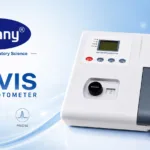
There is a particular kind of frustration that every analytical chemist knows intimately. You spend forty-five minutes preparing a set of samples and running your measurements—and halfway through the sequence, something shifts. The baseline drifts. The lamp warms up. The readings from your last five samples no longer align cleanly with your calibration curve. You are left wondering: is this the chemistry, or is this the instrument?
If that scenario sounds familiar, it is almost certainly because you have been working with a single-beam spectrophotometer—and it is almost certainly why more laboratories across India and worldwide are making the switch to the Double Beam UV-VIS Spectrophotometer.
This is not about dismissing single-beam instruments. For straightforward, single-wavelength routine measurements, a quality single-beam UV-Visible spectrophotometer remains a dependable, cost-effective workhorse. But as laboratory demands grow more complex—longer measurement sequences, tighter regulatory requirements, more sensitive detection needs, and wavelength scanning protocols—the limitations of single-beam architecture become harder to work around. And the case for the Double Beam UV-VIS Spectrophotometer becomes compelling, then unavoidable.
Lasany International, one of India’s most respected and longest-established spectrophotometer manufacturers, has watched this shift happen across pharmaceutical companies, research institutions, environmental testing laboratories, and food quality control facilities for years. In this guide, they explain exactly what drives it—and what laboratories gain when they make the move.
The Core Problem: Why Drift Destroys Data Integrity
To understand why laboratories are switching to the Double Beam UV-VIS Spectrophotometer, you first need to understand what goes wrong with single-beam measurements during real laboratory sessions.
In a single-beam instrument, the light source and detector are measured sequentially—first the blank, then the sample. The absorbance value your instrument reports is calculated from the ratio of those two readings. This works perfectly if, and only if, the instrument’s output remains completely stable between the moment you measure the blank and the moment you measure the sample.
In reality, it never does.
Deuterium and tungsten-halogen lamps do not emit a perfectly constant intensity from one second to the next. As they warm up, cool down, or simply age, their output fluctuates. The detector’s sensitivity drifts with temperature. Even minor vibrations, air currents near the sample compartment, or voltage fluctuations in the mains supply introduce noise into the signal chain. In a single-beam measurement, all of these fluctuations appear as apparent changes in your sample’s absorbance—because there is no simultaneous reference measurement to cancel them out.
For a quick, single-point colorimetric assay measured in under a minute, these effects are often negligible. But for a ten-minute enzyme kinetics study, a full-spectrum wavelength scan from 190 nm to 900 nm, or a thirty-sample batch sequence run over two hours — drift is not negligible. It is a serious source of analytical error that compromises data quality and reproducibility.
The Double Beam UV-VIS Spectrophotometer was designed precisely to solve this problem.
How the Double Beam UV-VIS Spectrophotometer Eliminates Drift—by Design
The fundamental innovation in the Double Beam UV-VIS Spectrophotometer is architectural. Instead of using a single light path that the analyst switches between blank and sample sequentially, a double beam instrument uses a beam splitter — typically a half-mirror or rotating sector mirror — to divide the monochromatic light into two simultaneous, equal-intensity beams.
One beam passes through the sample cuvette. The other passes through the reference cuvette containing the blank or pure solvent. Both beams are measured at exactly the same instant by the detector system — and the Double Beam UV-VIS Spectrophotometer calculates absorbance from the real-time ratio of the two signals.
Here is why this matters so profoundly: because the sample and reference are measured simultaneously rather than sequentially, any change in lamp intensity, detector response, or environmental conditions affects both beams equally and cancels out completely in the ratio. Drift — the persistent enemy of single beam spectrophotometry — simply disappears.
The practical consequences of this design are significant:
Longer measurement sequences become reliable. A laboratory running a Double Beam UV-VIS Spectrophotometer can measure thirty, fifty, or even one hundred samples in a single batch session and be confident that the last reading is as accurate as the first — without the need to re-blank every few samples.
Wavelength scanning becomes meaningful. When the Double Beam UV-VIS Spectrophotometer sweeps from 190 nm to 1100 nm to build an absorption spectrum, the automatic real-time baseline correction ensures that what you see is the genuine spectral fingerprint of your compound — not a mixture of chemistry and instrumental drift.
Kinetic studies become trustworthy. Enzyme activity assays, reaction monitoring, and time-course studies all require stable, accurate absorbance measurements over extended periods. The Double Beam UV-VIS Spectrophotometer makes these studies reliably executable in ways that single beam instruments simply cannot match.
What Laboratories Are Actually Gaining: A Discipline-by-Discipline Look
The switch to the Double Beam UV-VIS Spectrophotometer delivers different—but consistently significant—benefits across every laboratory setting:
- Pharmaceutical QC and R&D
Pharmaceutical laboratories operate under ICH, USP, BP, and IP requirements that demand validated, reproducible analytical methods. The Double Beam UV-VIS Spectrophotometer supports method validation with its superior precision and reproducibility, makes dissolution testing across multiple timepoints reliable, and provides the stability testing data quality that regulatory submissions require. GLP-compliant data logging, audit trails, and time/date stamping—built into advanced models from Lasany International—make the Double Beam UV-VIS Spectrophotometer audit-ready without additional investment.
- Biochemistry and Life Sciences Research
Protein quantification assays, nucleic acid analysis, enzyme kinetics, and cell culture monitoring are all time- and temperature-sensitive measurements where the drift correction of the Double Beam UV-VIS Spectrophotometer is not just convenient—it is essential. A protein assay that takes fifteen minutes to read cannot afford to have its final readings contaminated by lamp drift. A DNA quantification at 260 nm that must be accurate to ± 0.005 Abs cannot tolerate the baseline instability of a single-beam design.
- Environmental Testing and Water Quality
Environmental monitoring laboratories often run long batch sequences of water, wastewater, and soil extract samples—testing nitrates, phosphates, heavy metals, and organic pollutants sample after sample, hour after hour. The consistency and reliability of the Double Beam UV-VIS Spectrophotometer across extended measurement sessions is exactly what these laboratories need to generate defensible, audit-ready data for regulatory submissions to CPCB, BIS, and WHO-aligned water quality standards.
- Food Safety and Industrial Quality Control
Food quality laboratories that use colorimetric and turbidimetric methods for vitamins, preservatives, colorants, and contaminant detection benefit from the speed advantage of the Double Beam UV-VIS Spectrophotometer — faster scanning, reliable multi-sample sequences, and spectral data quality that supports method development for novel food matrices.
The Numbers That Drive the Decision: Key Specifications Explained
When evaluating a Double Beam UV-VIS Spectrophotometer, the following specifications translate directly to real-world analytical performance:
- Wavelength Range (190–1100 nm): Full UV and visible coverage in a single instrument eliminates the need for separate UV and visible spectrophotometers.
- Photometric Accuracy (±0.002 Abs at 0.5 Abs): The simultaneous dual-beam correction achieves this level of accuracy reliably — a benchmark that single beam instruments struggle to match across a full measurement session.
- Stray Light (< 0.05% T): Low stray light — achieved through high-quality holographic gratings and precision optical bench design — ensures accuracy at both very low and very high absorbance values.
- Scan Speed (up to 3000 nm/min): Fast scanning, combined with real-time baseline correction, makes full spectral characterization a practical tool rather than a time-consuming luxury.
- Spectral Bandwidth (0.5–5 nm, selectable): Variable bandwidth gives the Double Beam UV-VIS Spectrophotometer flexibility to resolve closely spaced spectral features when needed, while maintaining high light throughput for routine measurements.
Why Lasany International Is the Right Choice for Your Double Beam UV-VIS Spectrophotometer
When it comes to sourcing a Double Beam UV-VIS Spectrophotometer in India, Lasany International offers something that imported alternatives simply cannot: world-class analytical performance at competitive Indian pricing, backed by over 25 years of spectrophotometer manufacturing experience and a nationwide after-sales service network.
Established in 1998 and manufacturing spectrophotometers since 2006, Lasany International has supplied instruments to over 97 countries worldwide — building a global reputation for reliability, precision optics, and genuine customer support. Their complete Double Beam UV-VIS Spectrophotometer range covers every laboratory requirement:
LI-2702 — Double Beam Microprocessor UV-VIS Spectrophotometer with two-cell holder and Bluetooth-enabled Android software for wireless data transfer. Wavelength range 190–1100 nm.
LI-2900—Double Beam Microprocessor UV-VIS Touch Screen Spectrophotometer with full scanning software. ARM chip control, large touchscreen interface, and comprehensive analytical modes, including kinetics, multi-wavelength, and DNA/protein analysis.
LI-2904 — Double Beam UV-VIS Touch Screen Spectrophotometer featuring an 8-inch colour touchscreen, 1600 lines/mm holographic grating, wavelength accuracy ±0.3 nm, scan speed up to 3000 nm/min, and GLP-compliant data management. One of the most advanced Double Beam UV-VIS Spectrophotometers available from an Indian manufacturer.
LI-2802 R—Double Beam Microprocessor UV-VIS Spectrophotometer with Peltier temperature control system and automated sipper—designed for temperature-sensitive kinetics studies and high-throughput analysis in pharmaceutical and biochemical laboratories.
LI-3001—Double Beam Xenon Flash Lamp The spectrophotometer offers superior lamp stability and accuracy through xenon flash technology—the flagship instrument in the Lasany International double-beam UV-VIS range.
Every Double Beam UV-VIS Spectrophotometer from Lasany International is backed by comprehensive after-sales support: on-site installation, operator training, annual performance qualification, preventive maintenance, and rapid spare parts availability through a pan-India service network. For laboratories transitioning from single beam to double beam, Lasany International also provides application-specific guidance to help teams get the most from their new instrument from day one.
Making the Decision: Is It Time to Switch?
The honest answer is: if your laboratory currently runs a Single Beam UV Visible Spectrophotometer and you find yourself routinely encountering any of the following situations, the switch to a Double Beam UV-VIS Spectrophotometer is overdue.
You re-blank your instrument multiple times during a sample batch because you cannot trust that the baseline has held. Your wavelength scans show baseline artifacts that complicate spectral interpretation. Your kinetic studies show unexplained drift that makes rate calculations unreliable. You run regulatory-grade analyses where reproducibility must be demonstrable and audit-ready. You measure samples with absorbances above 1.5 Abs where stray light and baseline stability become critical.
If any of these describe your current reality, the Double Beam UV-VIS Spectrophotometer from Lasany International is the instrument that resolves them — permanently.
Conclusion
The shift from single beam to Double Beam UV-VIS Spectrophotometer is not simply about upgrading to a more expensive instrument. It is about gaining the analytical confidence that comes from knowing your data accurately reflects your chemistry — not your instrument’s behaviour.
The Double Beam UV-VIS Spectrophotometer eliminates drift by design. It enables scanning, kinetics, and long-batch analysis with a reliability that single beam instruments cannot provide. And for laboratories operating under regulatory scrutiny, research pressure, or simply the daily demand for accurate, reproducible results, that reliability is not a luxury. It is a necessity.
Lasany International has built a Double Beam UV-VIS Spectrophotometer range specifically designed to give Indian and global laboratories access to that reliability — at pricing that makes the upgrade genuinely achievable, backed by the service expertise that makes it genuinely worthwhile.
Make the switch. Visit www.lasany.org to explore the complete range and request a personalised quotation today.
Get in Touch with Us: –
Panchkula, Haryana
Website: https://lasany.org/
Address: SCF-132, Sector 17, Panchkula, Haryana 134109
Emails: lasanyinternationalindia@gmail.com, sales@lasanyspectrophotometers.com
Online Support: 9888911439 / 9803017479
If you are looking for laboratory, analytical, and medical products, then Lasany International is the perfect choice for you